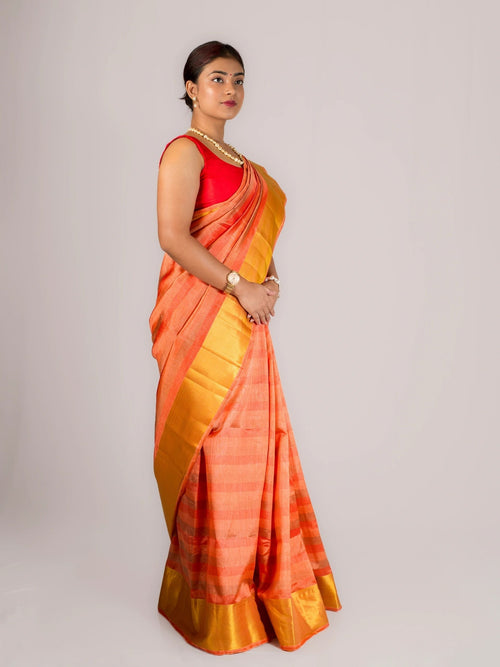


Finding a pure Banarasi silk saree under 10000 might sound unrealistic—especially when luxury bridal pieces can run into lakhs. But here’s the truth: authentic Banarasi sarees do exist in this budget. The catch? You need to understand what qualifies as “pure” and what compromises (if any) are involved.
This guide breaks down exactly what you can expect in the ₹8,000–₹10,000 range—and how to avoid overpaying for something that only looks authentic.
What Makes a Banarasi Saree Authentic?
Not all Banarasi sarees are created equal. Authenticity comes down to three key elements:
1. Zari Quality
Real Banarasi sarees traditionally use zari made from silver threads, often gold-plated. In budget-friendly sarees, you’ll usually find:
-
Tested zari (a blend, not pure silver)
-
Durable metallic threads with a softer sheen
Pure gold or silver zari is rare at this price—but good-quality tested zari can still look elegant and last long.
2. Weaving Technique
Authentic Banarasi sarees are:
-
Handwoven, not mass-produced
-
Crafted on traditional looms in Varanasi
-
Known for intricate motifs like florals, paisleys, and Mughal-inspired designs
Power loom sarees may look similar—but lack the depth, irregularity, and richness of handloom weaving.
3. Silk Grade
“Pure silk” doesn’t always mean the same thing. Look for:
-
Natural silk fibers (not synthetic blends)
-
Recognizable textures and slight irregularities (a sign of authenticity)
What ₹8,000–₹10,000 Actually Gets You
Let’s set realistic expectations. In this price range, you can absolutely find genuine Banarasi sarees—but typically in these categories:
Katan Silk (Entry-Level)
-
Lighter than premium Katan
-
Elegant, minimalistic weaving
-
Ideal for festive wear and small occasions
Organza (Kora Silk)
-
Sheer, lightweight, slightly crisp texture
-
Delicate zari work with a subtle finish
-
Perfect for daytime events
Tussar Banarasi
-
Textured, slightly raw silk feel
-
Earthy tones with traditional motifs
-
Great for understated elegance
Expect simpler designs, lighter zari work, and less density compared to high-end sarees—but still authentically handcrafted.
What to Avoid When Buying a Pure Banarasi Silk Saree Under 10000
This is where most buyers go wrong. Watch out for:
Fake Zari
-
Looks overly shiny or plastic-like
-
Fades quickly after a few wears
Power Loom Sarees Sold as Handloom
-
Too perfect and uniform
-
Much cheaper to produce—but often overpriced when mislabeled
“Banarasi Style” or “Banarasi Look”
-
These are not authentic Banarasi sarees
-
Usually machine-made with synthetic fibers
Unrealistic Discounts
-
A “pure silk Banarasi” priced at ₹3,999 is a red flag
-
If it sounds too good to be true—it usually is
Buy With Confidence
At Weave Owl, every saree in this range is handwoven in Varanasi.
Browse our curated ₹8,000–₹10,000 collection → (insert link)
5 Questions to Ask Before Buying Online
Before you click “Buy Now,” ask these:
-
Is this handloom or power loom?
Look for clear mention—avoid vague descriptions -
What type of silk is used?
Katan, organza, Tussar—specificity matters -
What kind of zari is used?
Tested zari vs pure—both are fine, but you should know -
Is it made in Varanasi?
Authentic Banarasi sarees come from this region -
Are there real product photos or just catalog images?
Zoom in—authentic weaves show texture and slight irregularity
Final Thoughts
Buying a pure Banarasi silk saree under 10000 is absolutely possible—if you focus on craftsmanship over hype. You may not get bridal-level opulence, but you will get a timeless piece of Indian heritage that’s elegant, wearable, and real.
If you’re thoughtful about what you’re buying, this price range offers incredible value.

