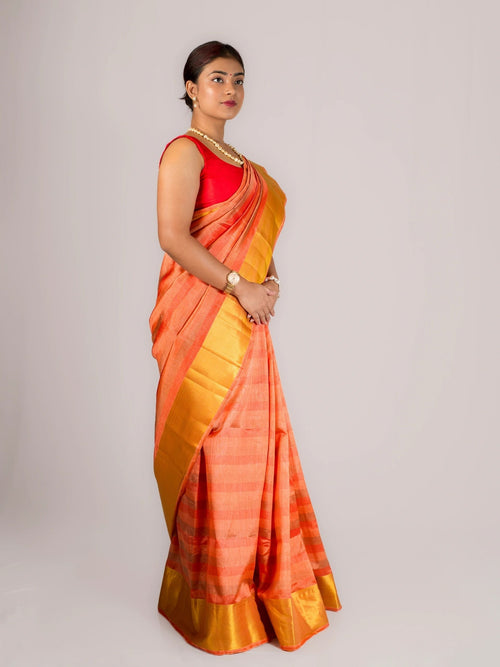


A Kanjivaram silk saree is more than just a piece of clothing. It represents centuries of weaving tradition, exceptional craftsmanship, and timeless elegance. Known for its rich silk, intricate zari work, and vibrant colors, the Kanjivaram saree remains one of India's most treasured handwoven textiles.
However, with the growing popularity of these sarees, the market has also seen an increase in imitation products. Many buyers struggle to differentiate between an authentic saree and a fake one, especially when shopping online. Understanding the key differences can help you make an informed purchase and ensure you receive genuine value for your money.
This guide explains how to identify a genuine Kanjivaram silk saree, understand its pricing, and avoid common mistakes when buying.
What Is a Kanjivaram Silk Saree?
A Kanjivaram silk saree originates from Kanchipuram, a historic town in Tamil Nadu known for its skilled silk weavers. These sarees are traditionally handwoven using high-quality mulberry silk and decorated with intricate zari patterns inspired by temples, nature, and traditional motifs.
A pure Kanjivaram silk saree is recognized for its durability, luxurious texture, rich colors, and heavy drape. Many families consider these sarees heirloom pieces that are passed down through generations.
See Our Collections :
Pure Silk Sarees Under 10K | Organza Silk Sarees Under 10K | Tissue Silk Sarees Under 10K | Handcrafted Sarees Under 10K | Cotton Silk Sarees Under 10K | Katan Silk Sarees Under 10K | Georgette Sarees Under 10K | Banarasi Silk SareesUnder 10k
Why Are Fake Kanjivaram Sarees So Common?
The demand for Kanjivaram sarees has increased significantly in recent years. Unfortunately, this demand has led to the production of machine-made and synthetic alternatives marketed as authentic silk sarees.
Many fake sarees are designed to look similar to genuine Kanjivaram sarees at first glance. They often use artificial silk, polyester blends, or low-quality zari to imitate the appearance of traditional craftsmanship.
While these alternatives may be cheaper, they lack the quality, durability, and cultural value of an original handwoven saree.
How to Identify an Original Kanjivaram Silk Saree
Check the Silk Quality
A genuine Kanjivaram silk saree is woven using pure mulberry silk. The fabric feels rich, smooth, and slightly heavy. Authentic silk has a natural sheen that changes when viewed from different angles.
Fake sarees often have an overly glossy appearance and may feel stiff or lightweight.
Examine the Zari Work
Traditional Kanjivaram sarees feature intricate zari woven into the fabric. High-quality zari uses silver threads coated with gold plating.
In many imitation sarees, synthetic metallic threads replace genuine zari. These threads often appear too shiny and may lose their color over time.
Look at the Border and Pallu
One of the most distinctive features of a Kanjivaram silk saree original is the separate weaving of the body, border, and pallu. Skilled artisans interlock these sections using a traditional weaving technique that enhances strength and durability.
In fake sarees, the border and pallu are often stitched or machine-produced as part of a single fabric piece.
Check for Silk Certification
A reliable way to verify authenticity is to look for silk certification. Reputable sellers often provide certification that confirms the saree is made from pure silk.
Certification offers buyers additional confidence regarding quality and authenticity.
Observe the Weight
A pure Kanjivaram silk saree generally feels heavier than synthetic alternatives due to the use of premium silk and zari. The saree drapes gracefully while maintaining its structure.
Lightweight sarees advertised as traditional Kanjivaram silk should be examined carefully before purchase.
Understanding Kanjivaram Silk Saree Price
One of the most common questions buyers ask is about the Kanjivaram silk saree price.
The price of a saree depends on several factors, including:
- Quality of silk
- Type of zari used
- Complexity of weaving
- Design details
- Artisan craftsmanship
- Time required to create the saree
A genuine handwoven Kanjivaram silk saree typically costs more than machine-made alternatives because of the skill and effort involved in its production.
Premium bridal designs with intricate zari work often command higher prices, while simpler designs may be available at more accessible price points.
If a saree is advertised as a pure Kanjivaram silk saree at an unusually low price, buyers should carefully verify its authenticity.
Common Signs of a Fake Kanjivaram Saree
When shopping for silk sarees, watch for these warning signs:
Extremely Low Prices
Authentic silk and handwoven craftsmanship come at a cost. Prices that seem too good to be true often indicate synthetic materials or machine production.
Lack of Product Information
Reliable sellers provide detailed information about silk quality, weaving methods, and craftsmanship. Missing or vague descriptions should raise concerns.
Excessively Glossy Appearance
Synthetic fabrics often have an artificial shine that differs from the subtle elegance of natural silk.
No Certification or Authenticity Details
Trusted sellers are transparent about their materials and sourcing practices. A lack of authenticity information may indicate a counterfeit product.
Why Investing in a Pure Kanjivaram Silk Saree Is Worth It
A pure Kanjivaram silk saree is not simply a fashion purchase. It is an investment in craftsmanship, heritage, and quality.
These sarees are known for:
- Exceptional durability
- Timeless designs
- Rich cultural significance
- Elegant drape
- Long-lasting beauty
Many women preserve their Kanjivaram sarees for decades and pass them on as family heirlooms.
Choosing an authentic saree also supports traditional weaving communities and helps preserve centuries-old craftsmanship.
Tips for Buying a Genuine Kanjivaram Saree
Before making a purchase, consider these practical tips:
- Buy from trusted and established sellers.
- Request silk certification whenever possible.
- Review detailed product descriptions.
- Examine close-up images of the weaving and zari work.
- Compare prices across reputable retailers.
- Read customer reviews and testimonials.
- Ask questions about silk quality and weaving methods.
Taking these steps can help ensure that you receive an authentic saree that offers lasting value.
Final Thoughts
A Kanjivaram silk saree is one of the finest examples of Indian textile artistry. While imitation products are widely available, understanding the characteristics of a genuine saree can help you make a confident purchase.
Whether you are shopping for a wedding, festive occasion, or a timeless addition to your wardrobe, choosing a pure Kanjivaram silk saree ensures that you enjoy the beauty, craftsmanship, and heritage that make these sarees truly special.
By paying attention to silk quality, zari work, craftsmanship, certification, and pricing, you can confidently identify a Kanjivaram silk saree original and avoid counterfeit alternatives.
Frequently Asked Questions
How can I identify a Kanjivaram silk saree original?
Look for pure silk texture, traditional weaving techniques, quality zari work, silk certification, and detailed craftsmanship. Authentic sarees are generally heavier and more durable than synthetic alternatives.
What is the average Kanjivaram silk saree price?
The price varies depending on silk quality, zari work, design complexity, and craftsmanship. Genuine handwoven sarees are typically priced higher than machine-made or imitation versions.
Is every silk saree from Kanchipuram a pure Kanjivaram silk saree?
Not necessarily. Buyers should verify the silk quality, weaving process, and authenticity certification before making a purchase.
Why are pure Kanjivaram silk sarees expensive?
They require premium silk, skilled artisans, traditional handloom techniques, and extensive weaving time. These factors contribute to their value and longevity.
Can a Kanjivaram saree last for decades?
Yes. With proper care and storage, an authentic Kanjivaram silk saree can remain beautiful for generations.
Are online Kanjivaram sarees trustworthy?
Yes, provided you buy from reputable sellers who offer transparency regarding silk quality, craftsmanship, and certification.

