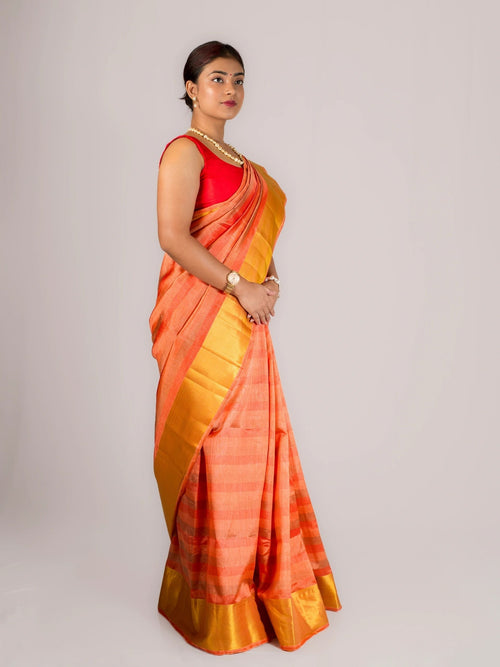


If you’ve ever shopped for a Banarasi saree, you’ve likely come across dozens of “pure silk” claims at wildly different prices. The reality? The market is flooded with imitations—from synthetic blends to power loom copies sold as handwoven pieces.
Knowing how to identify real Banarasi silk isn’t just helpful—it’s essential. The good news is, you don’t need to be an expert or a weaver to tell the difference. With a few simple checks, you can confidently separate authentic craftsmanship from clever replicas.
Test 1 — The Burn Test
This is one of the oldest and most reliable ways to check silk authenticity.
-
Take a few loose threads from the saree (usually from the edge or fall)
-
Burn them carefully
What to observe:
-
Real silk smells like burnt hair and turns into fine ash
-
Fake/synthetic fibers smell like plastic and form hard, sticky beads
Only do this if you already own the saree. Never try this on a product before purchase.
Test 2 — The Zari Test
Zari is what gives Banarasi sarees their signature richness—but it’s also commonly faked.
-
Gently scratch or inspect the zari threads
What to observe:
-
Real zari has a core of silver (sometimes gold-plated) with a soft metallic sheen
-
Fake zari often reveals red, white, or plastic threads underneath and may peel off
Authentic zari looks subtle and elegant—not overly shiny or flashy.
Test 3 — The Drape Test
Pure silk behaves very differently from synthetic blends.
-
Drape the saree over your shoulder or arm
What to observe:
-
Real Banarasi silk flows smoothly, hugs the body, and forms soft folds
-
Artificial fabrics feel stiff, bulky, or unnaturally slippery
This is something you can often judge even from videos or real customer photos online.
Test 4 — The Price Reality Check
Let’s be direct: a handwoven Banarasi saree cannot exist below ₹5,000.
If you see listings claiming:
-
“Pure Banarasi silk” at ₹2,999
-
“Heavy bridal Banarasi” under ₹4,000
…it’s almost certainly not authentic.
Why?
-
Handloom weaving takes days (sometimes weeks)
-
Skilled artisans (karigars) are involved
-
Real silk and zari have inherent costs
In most cases, a genuine entry-level Banarasi starts around ₹6,000–₹8,000.
Test 5 — The Weaver Proof
Authenticity isn’t just about the fabric—it’s about the source.
Look for:
-
GI (Geographical Indication) tag certification
-
Mention of origin: Varanasi
-
Seller transparency about weavers or sourcing
Trustworthy sellers will tell you:
-
What silk is used (Katan, organza, Tussar)
-
Whether it’s handloom or power loom
-
Details about the weaving process
If this information is missing or vague, that’s a red flag.
Buy With Confidence
At Weave Owl, we source directly from Varanasi karigars. Every piece comes with detailed weave information and fabric composition. Browse our authenticated collection Banarasi Royals
Final Thoughts
Learning how to identify real Banarasi silk doesn’t require technical expertise—just awareness. These five tests can save you from overpaying for imitations and help you invest in something truly meaningful.
A real Banarasi saree isn’t just clothing—it’s heritage, craftsmanship, and culture woven into every thread. When you know what to look for, you don’t just buy better—you buy with confidence.

