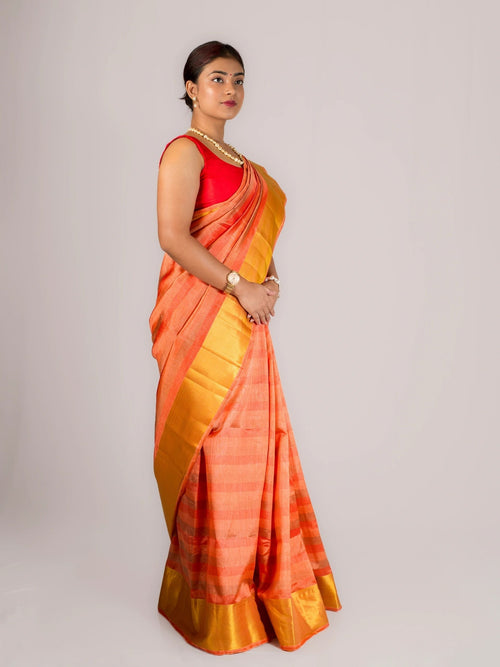


Indian weddings and festive functions are known for their rich traditions, vibrant colors, and beautiful outfits. Among the most elegant traditional garments for women are the half saree and the full saree. Both outfits carry cultural significance and are widely worn during celebrations, but they differ in style, structure, and occasion.
Many women often wonder whether a half saree or a full saree is better for weddings and functions. While both outfits look stunning, the right choice depends on factors like tradition, comfort, age group, and the type of event.
In this guide, we will explore 11 key differences between half saree and full saree to help you decide which one suits your occasion best.
1. What is a Half Saree?
A half saree, also known as Langa Voni or Pavadai Davani, is a traditional outfit mainly worn by young girls and unmarried women in South India.
It consists of three pieces:
-
A long skirt (lehenga-style bottom)
-
A blouse (choli)
-
A dupatta or drape (voni) styled like a saree pallu
This outfit represents the transition from childhood to adulthood in many cultural traditions.
See our collections:
Satin Silk Sarees | Red Satin Silk Sarees | Khadi Silk Sarees | Wedding Silk Sarees | Wedding Banarasi Silk Sarees | Marriage Silk Sarees | Bridal Silk Sarees | Cotton Silk Wedding Sarees | Resham Silk Sarees for Weddings | Bridal White Silk Sarees
2. What is a Full Saree?
A full saree is the classic six-yard draped garment worn by women across India. It is usually paired with a blouse and petticoat.
Full sarees are considered the ultimate symbol of elegance and femininity in Indian fashion. They are commonly worn during weddings, festivals, religious ceremonies, and formal occasions.
3. Traditional Significance
Half sarees hold strong cultural importance in South India. They are often worn during coming-of-age ceremonies and festive occasions.
Full sarees, on the other hand, represent maturity and are traditionally worn by married women during important ceremonies and weddings.
4. Styling and Appearance
Half sarees create a youthful and vibrant look. The skirt adds volume, making the outfit look festive and colorful.
Full sarees provide a more graceful and sophisticated appearance because of their elegant drape and flowing silhouette.
5. Suitability for Age Groups
Half sarees are typically worn by teenage girls and young women.
Full sarees are more commonly worn by adult women and brides during wedding ceremonies and grand celebrations.
6. Comfort and Ease of Wear
Half sarees are relatively easy to wear because they resemble a lehenga with a dupatta drape.
Full sarees require proper draping techniques, which may take practice for beginners.
However, once draped properly, a saree can be very comfortable.
7. Best Occasions to Wear
Half sarees are perfect for:
-
Festive functions
-
Cultural events
-
Engagement ceremonies
-
Traditional celebrations
Full sarees are ideal for:
-
Weddings
-
Religious ceremonies
-
Formal events
- Grand celebrations
- 8. Bridal Fashion
Half sarees are rarely worn as bridal outfits, though they may be chosen for pre-wedding events.
Full sarees, especially Banarasi silk sarees or Kanjivaram sarees, are among the most popular bridal choices in India.
9. Styling Flexibility
Half sarees allow experimentation with different skirt designs, vibrant colors, and modern blouse patterns.
Full sarees offer endless draping styles and blouse designs, allowing women to create both traditional and contemporary looks.
10. Jewellery Styling
Both outfits pair beautifully with traditional jewellery.
Half sarees often look best with lighter jewellery such as jhumkas, necklaces, and bangles.
Full sarees are usually styled with heavier jewellery sets like temple jewellery, Kundan necklaces, and layered gold jewellery.
11. Overall Elegance
Half sarees create a playful and festive appearance, making them ideal for youthful celebrations.
Full sarees offer timeless elegance and sophistication, which makes them the preferred outfit for weddings and formal events.
Which One Should You Choose?
If you want a traditional yet youthful outfit, a half saree is a wonderful choice for festive functions and cultural events.
If you want a classic, elegant, and sophisticated look, a full saree is the perfect outfit for weddings and formal occasions.
Many women enjoy wearing both outfits depending on the event. A half saree can be perfect for pre-wedding celebrations, while a full saree is ideal for the wedding ceremony itself.
FAQs
What is the main difference between a half saree and a full saree?
A half saree consists of a skirt, blouse, and draped dupatta, while a full saree is a single six-yard garment draped around the body.
Is a half saree suitable for weddings?
Half sarees are suitable for wedding functions and festive events, but brides usually prefer full sarees for the main ceremony.
Which outfit is easier to wear?
Half sarees are generally easier to wear because they do not require traditional saree draping techniques.
Which outfit looks more traditional?
Full sarees are considered more traditional and are commonly worn during wedding ceremonies and religious rituals.
Can young women wear full sarees?
Yes, young women can wear full sarees for weddings, festivals, and formal events.

